Britta Ortiz
Biography
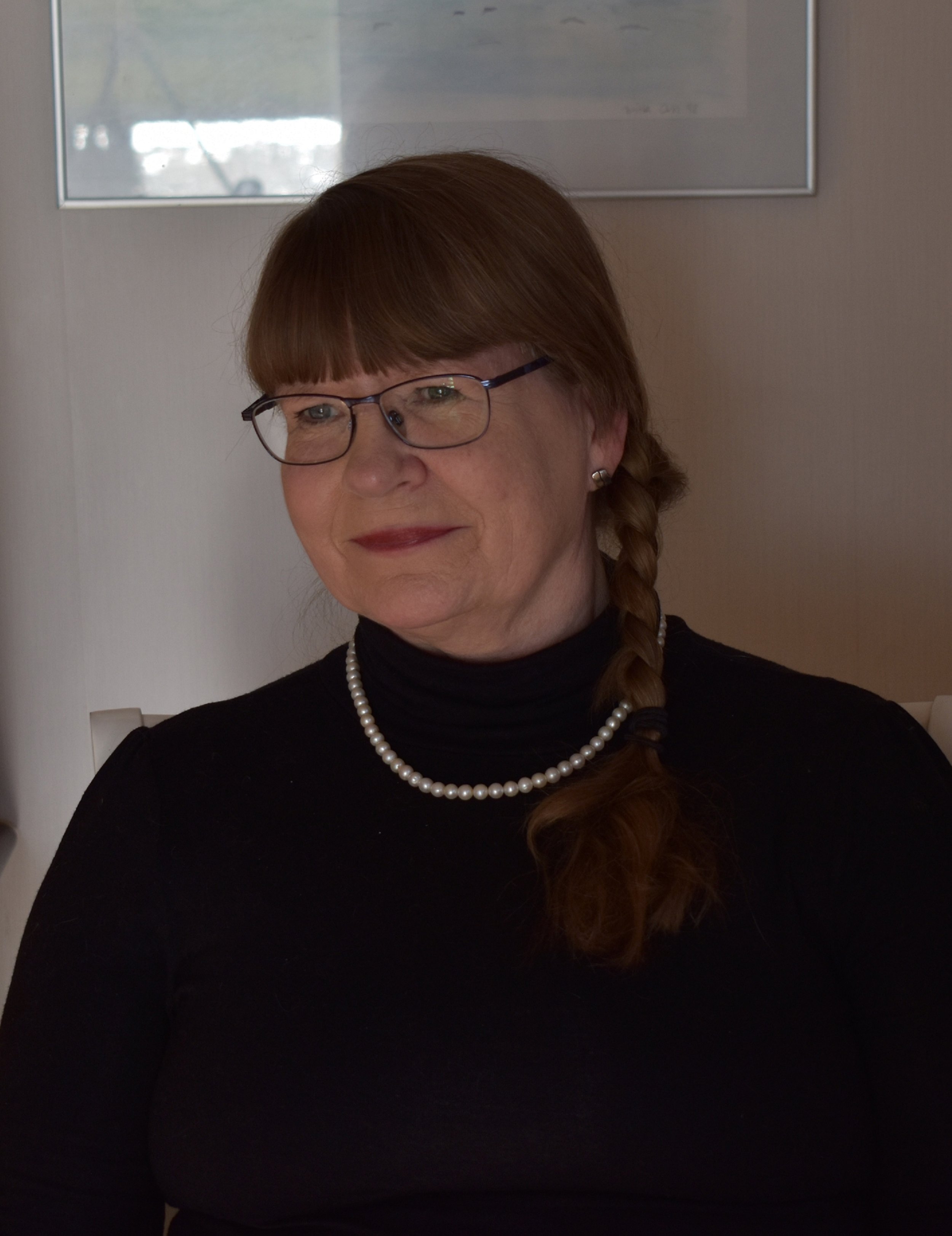
Britta Ortiz is a Danish artist born in 1959. She is a trained physician, has studied psychology, and holds a master’s degree in medical anthropology. Although she lacks formal artistic training, she has expressed herself artistically throughout her life, participating in various courses and receiving instruction from other artists. However, she has acquired most of her skills through personal experimentation; for her, the process is often more important than the final result.
Britta Ortiz resides in Denmark, living in a rural house surrounded by fields, where the local wildlife frequently visits her garden. Both her educational background and her life and experiences in the countryside - close to nature - inform her art. Her work depicts not only the beautiful aspects of existence but also the cruelty of life and the thin line that can separate life from death.
She approaches existence from an existential perspective; life must be lived within the tension between opposing poles - birth and death, sorrow and joy, and so on. The potential we are given should be fully realized, both through formal education and by experimenting with new materials and art forms.
In her art, she often uses nature to convey her views and reflections on life, as well as the human way of being in the world. For instance, her depictions of the fragility of life reflect her professional background as a physician. At the same time, her art embodies a deep love for nature and the world in which we live.
The Danish art critic Tom Jørgensen describes this very aptly: "The message is rarely explicitly political. Britta Ortiz is more interested in the universal human condition, and some of her images possess a dreamy, symbolic quality. Fundamental existential themes - such as loneliness, anxiety, anger, and resignation, but also solidarity and empathy - characterize these works, which leave a lasting impression on the viewer. As for her graphic work, Britta Ortiz’s woodcuts and linocuts - with their sharply defined compositions and sense of social indignation - are reminiscent of the German artist Käthe Kollwitz, as well as the Danish artists Søren Hjort Nielsen and Jane Muus."
Although Britta Ortiz has created art for virtually her entire life, she did not emerge on the art scene until 2010, as showcasing her work was never a priority for her. The most important aspect - then as now - is the creative process itself. Nevertheless, the art world has embraced her work, and since 2010, she has exhibited extensively both in Denmark and abroad, including in New York, San Diego, London, Rome, Vienna, Munich, and Venice.
Furthermore, her art is featured in numerous books and magazines. Britta Ortiz has also been active in several art collectives, some of which she helped to initiate. The sense of community surrounding art is very meaningful to her; it fosters the development of all members within the group while simultaneously creating a social bond.
Artist Statement
Human beings inherit knowledge from their ancestors, and some animals likewise transmit learned behavior between generations. Societies develop through accumulated experience, even as historical patterns repeat. Nations rise, dominate, decline, and are replaced by others. Cultures may imagine themselves more advanced than earlier civilizations, yet the complexity of societies created thousands of years ago challenges simple assumptions about linear progress.
This tension between repetition and change informs Ortiz’s reflections on history. Human societies possess the capacity to learn, but they repeatedly fail to prevent violence, domination, and destruction. History demonstrates how a small number of individuals can cause suffering and death on an enormous scale when others obey, participate, remain passive, or surrender their ethical judgment.
Ortiz is disturbed by the ability of political leaders to mobilize thousands or millions of people toward violence for personal power, ideology, revenge, or territorial ambition. She regards violence not as strength but as a failure of language, responsibility, and ethical self-control.
Unlike conflict among animals, which often concerns survival, territory, food, or reproduction, human violence can be organized around abstract claims, political ambitions, or systems of power. Animals may fight to reproduce or protect access to resources. Human beings develop methods of torture, mechanized warfare, and large-scale destruction directed against members of their own species. For Ortiz, this difference complicates claims of human superiority. Intelligence does not necessarily produce wisdom, restraint, or moral behavior.
Her work does not usually depict human violence directly. Instead, she often works through animals, insects, plants, and natural processes. This allows her to address difficult questions without illustrating a single political event or reducing the work to a fixed message.
An animal image can carry several meanings simultaneously. It can remain rooted in observed behavior while also prompting reflection on vulnerability, predation, fear, social organization, survival, or human conduct. The use of animals and natural elements can make the work accessible across cultural contexts because viewers are not required to identify with a particular nationality, social group, or historical narrative before engaging with the image.
https://britta-ortiz.dk/
https://www.instagram.com/brittaortiz/
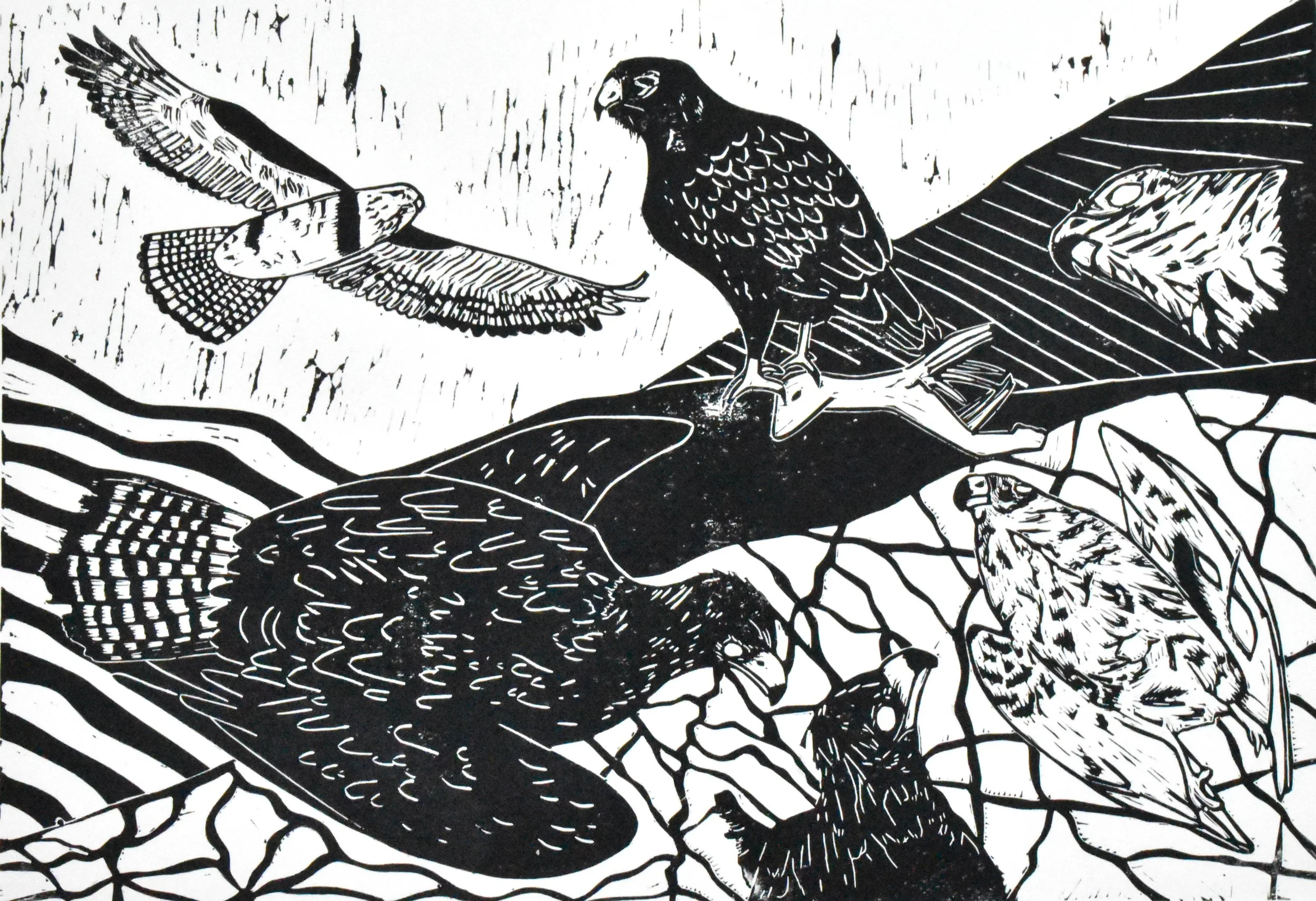
The Rise and Fall of the Common Buzzard, 2025, linocut printed on paper, 40 x 62 cm.
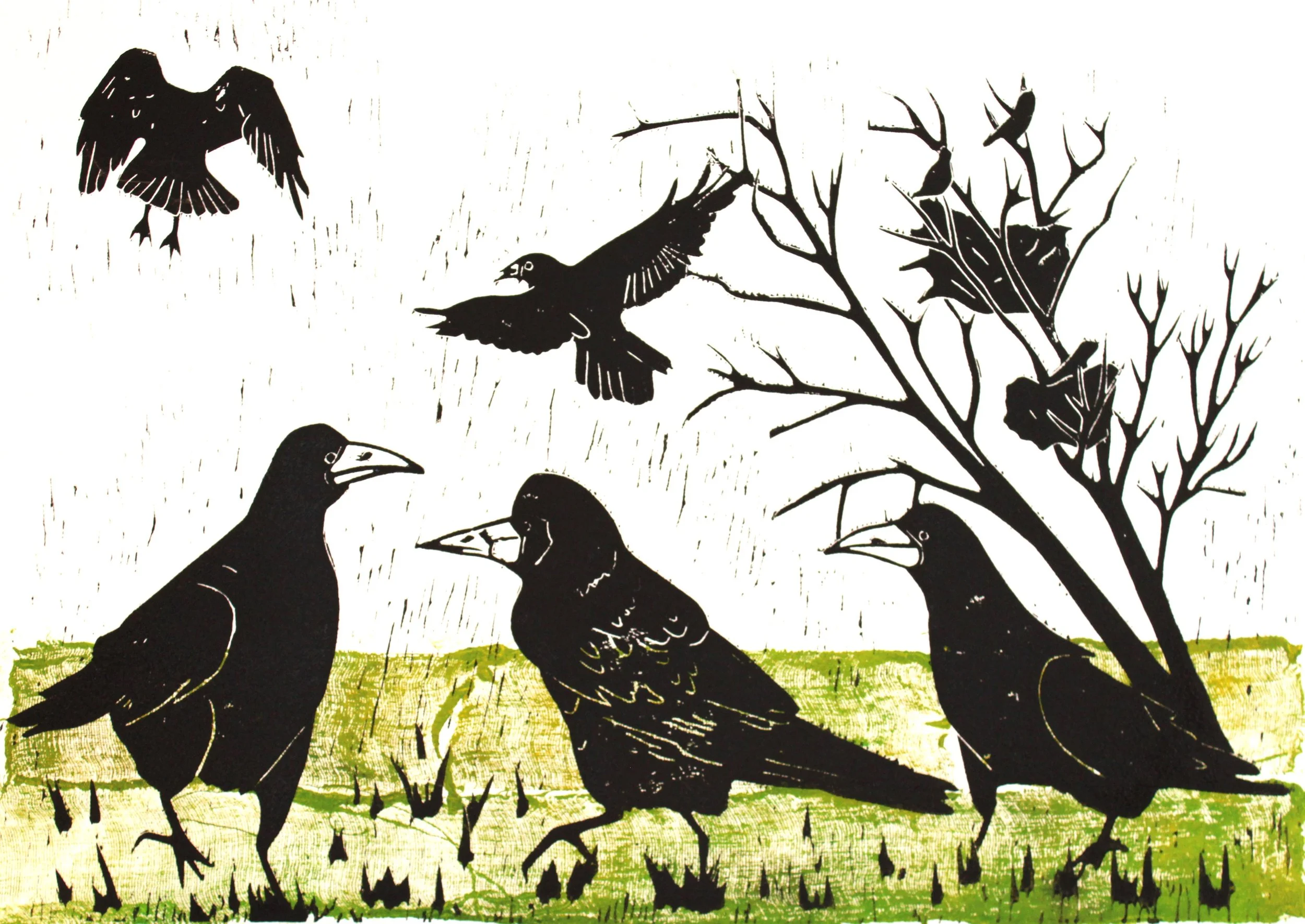
A very social bird, 2024, linocut printed on paper, 40 x 62 cm
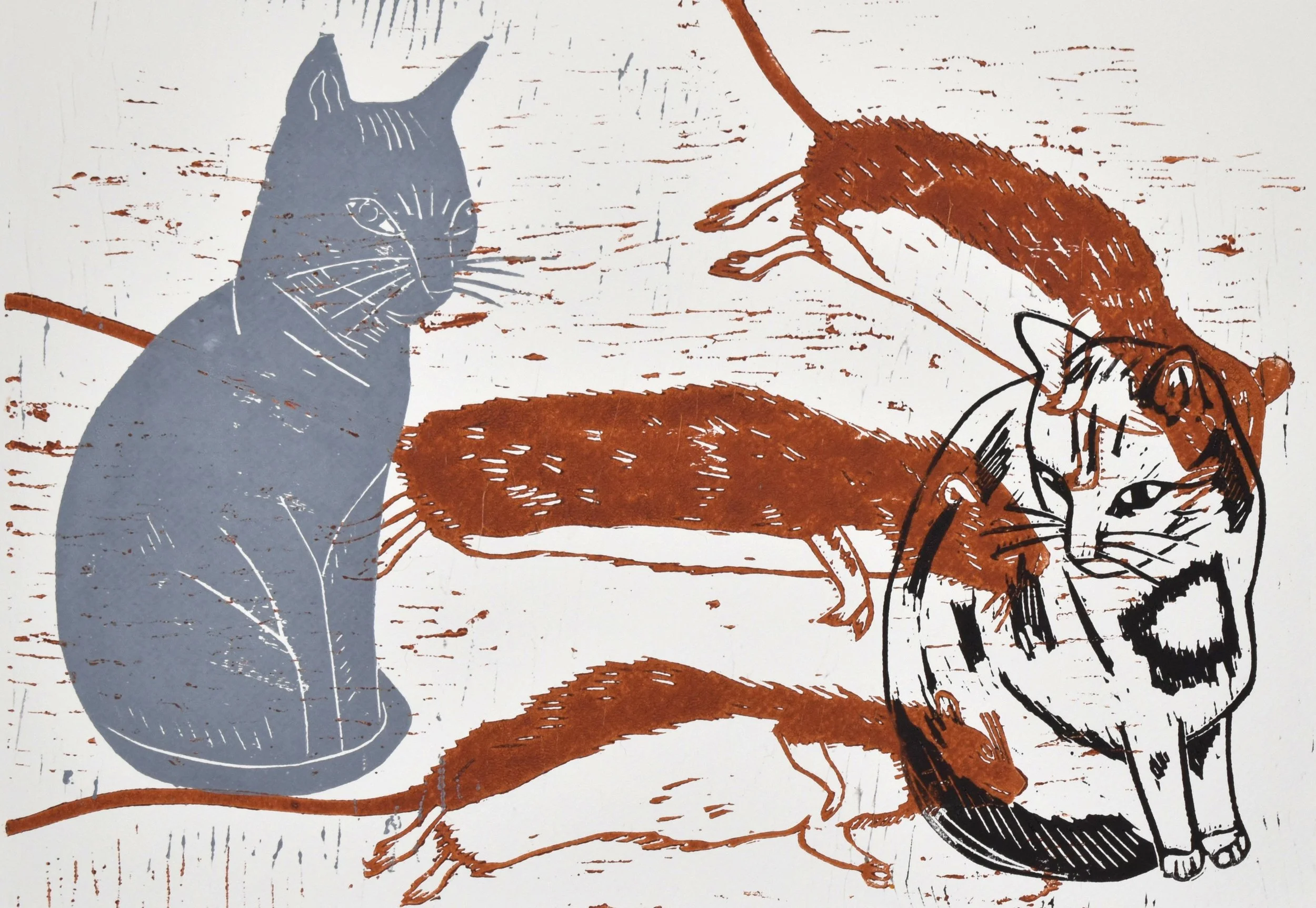
Long live the cats, 2024, linocut printed on paper, 30 x 42 cm
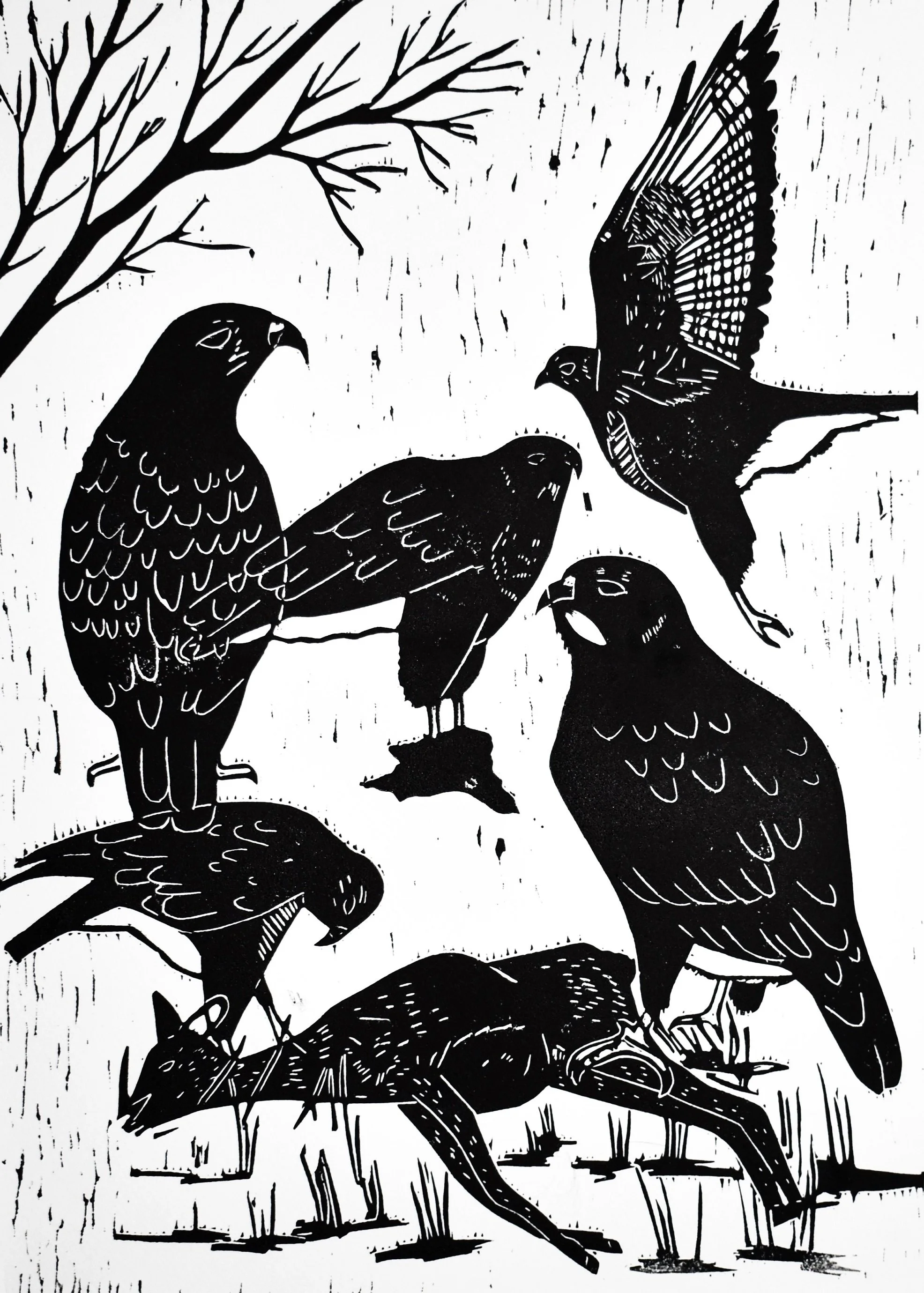
The Cycle of Life, 2023, Linocut printed on paper, 42 x 30 cm
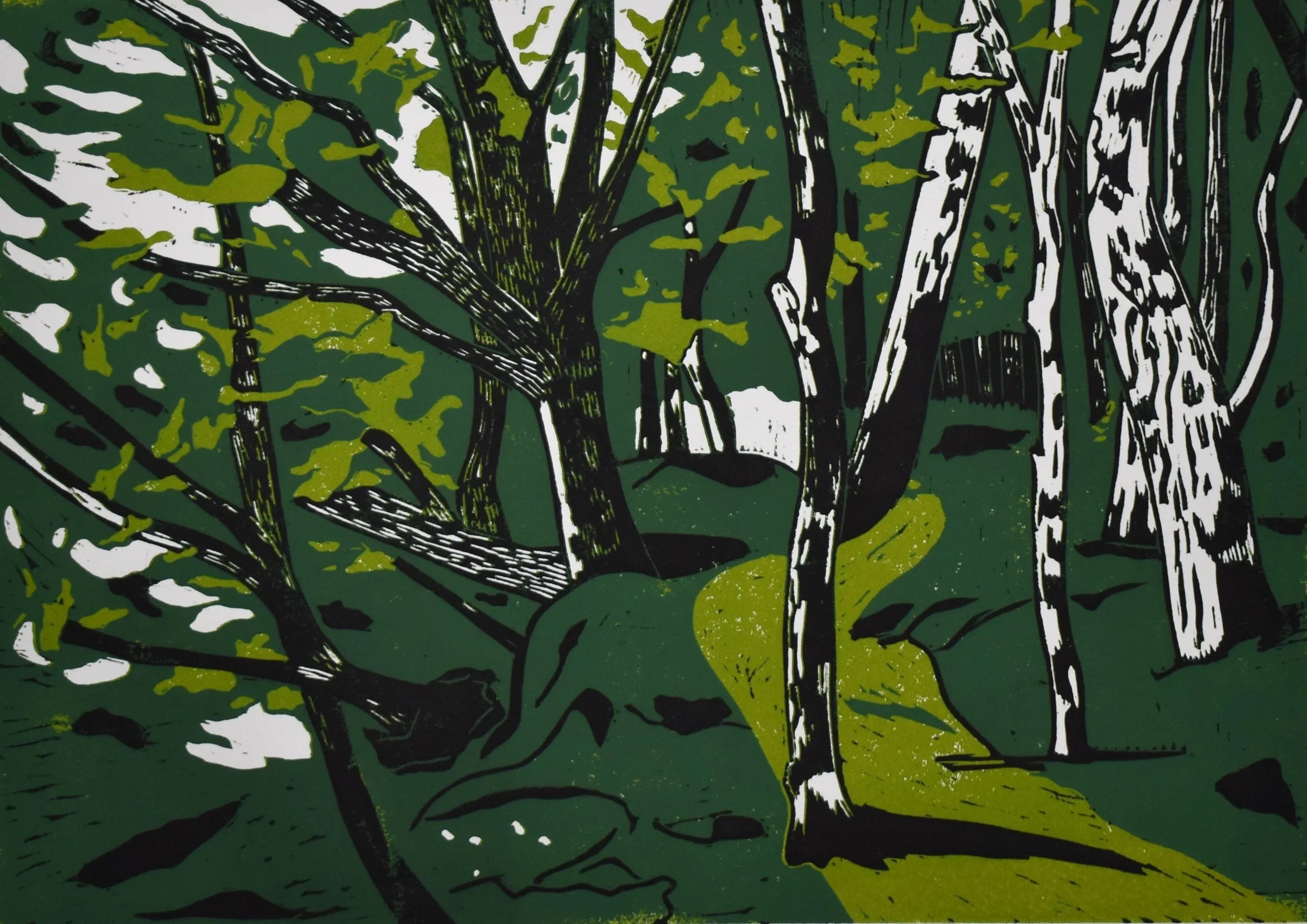
The Trip to the Woods, 2023, Linocut printed on paper, 30 x 42 cm.
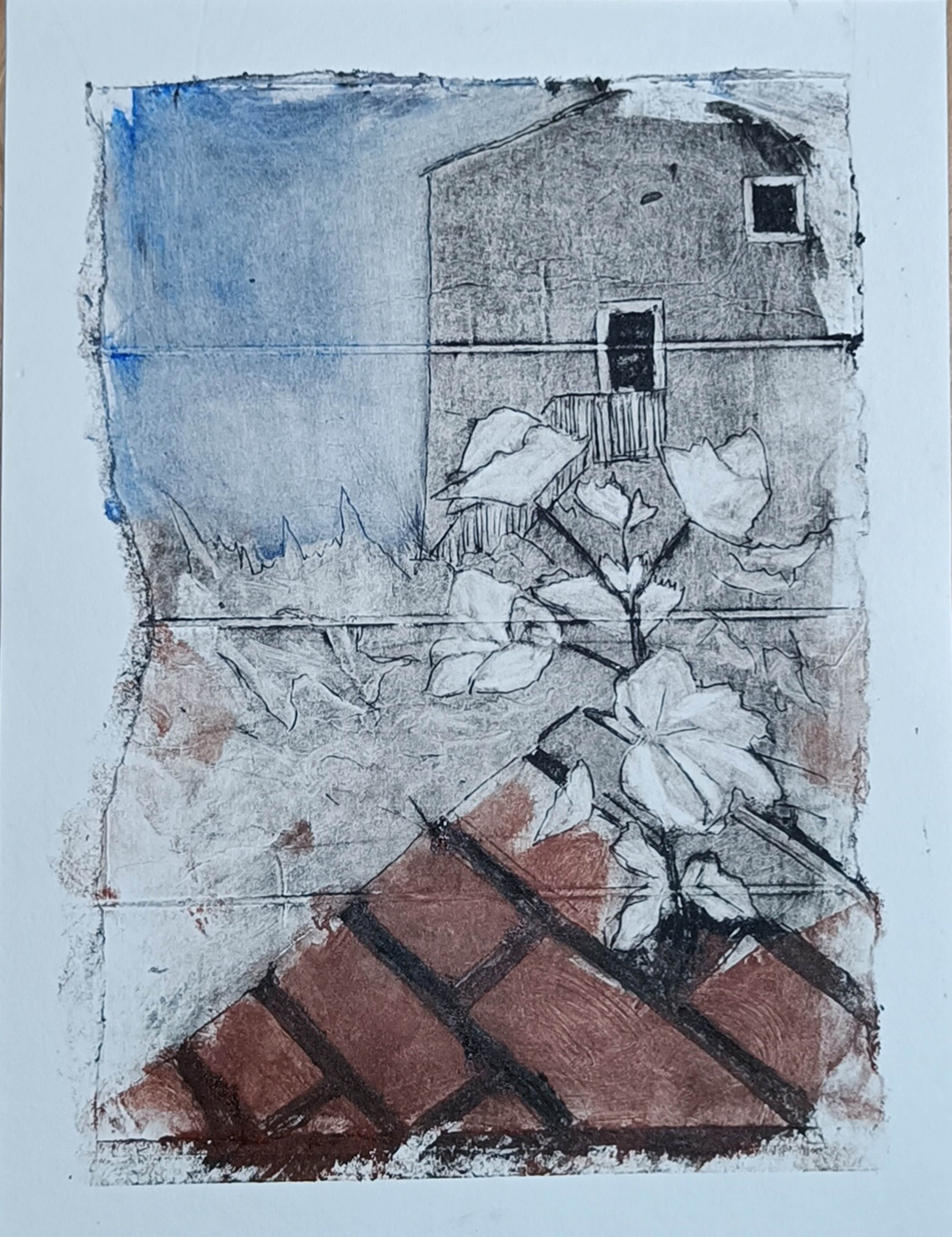
Indomitable, 2026, TetraPak Print on paper, 32 x 24 cm
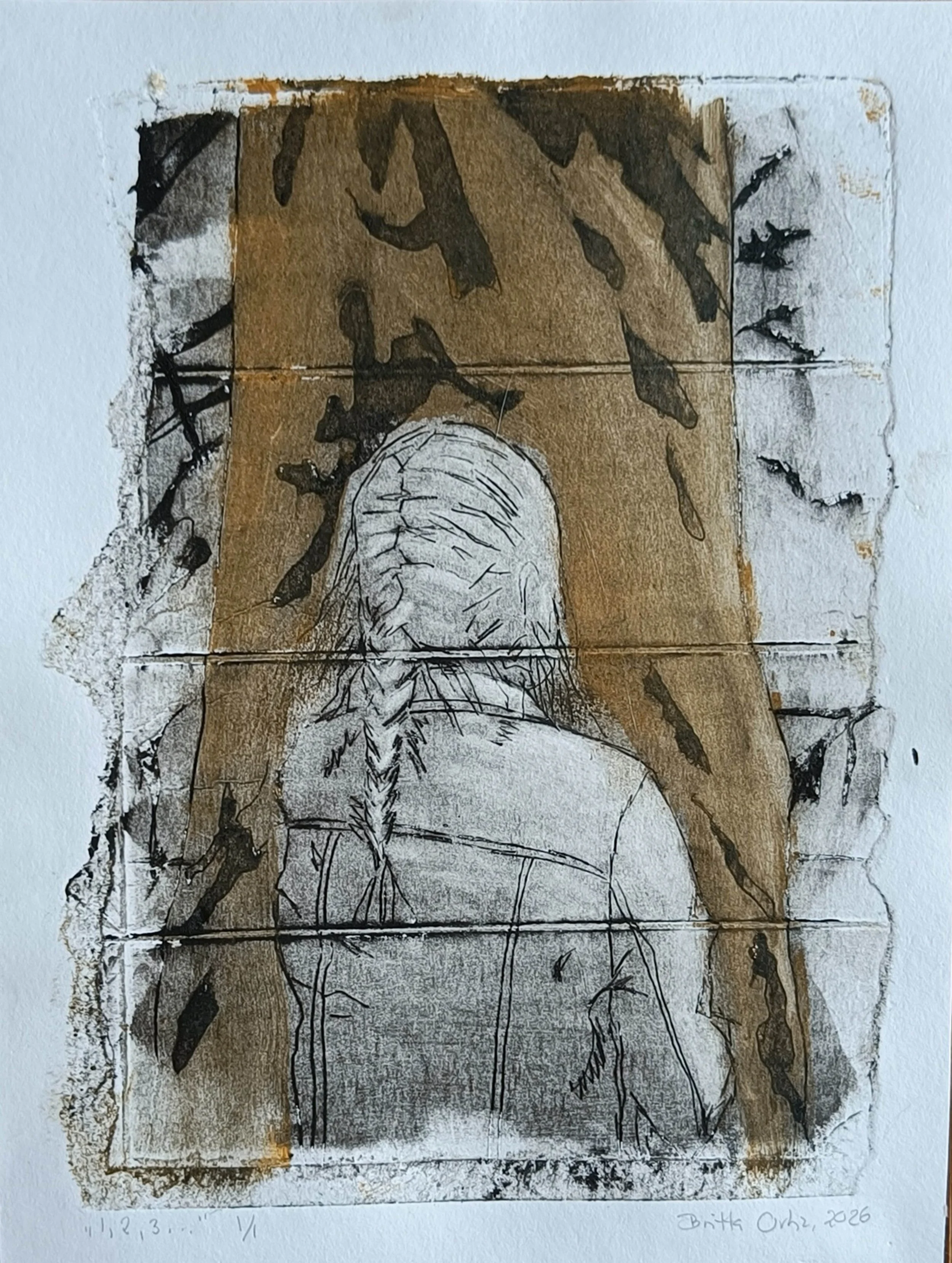
1,2,3..., 2026, TetraPak Print on paper, 32 x 24 cm
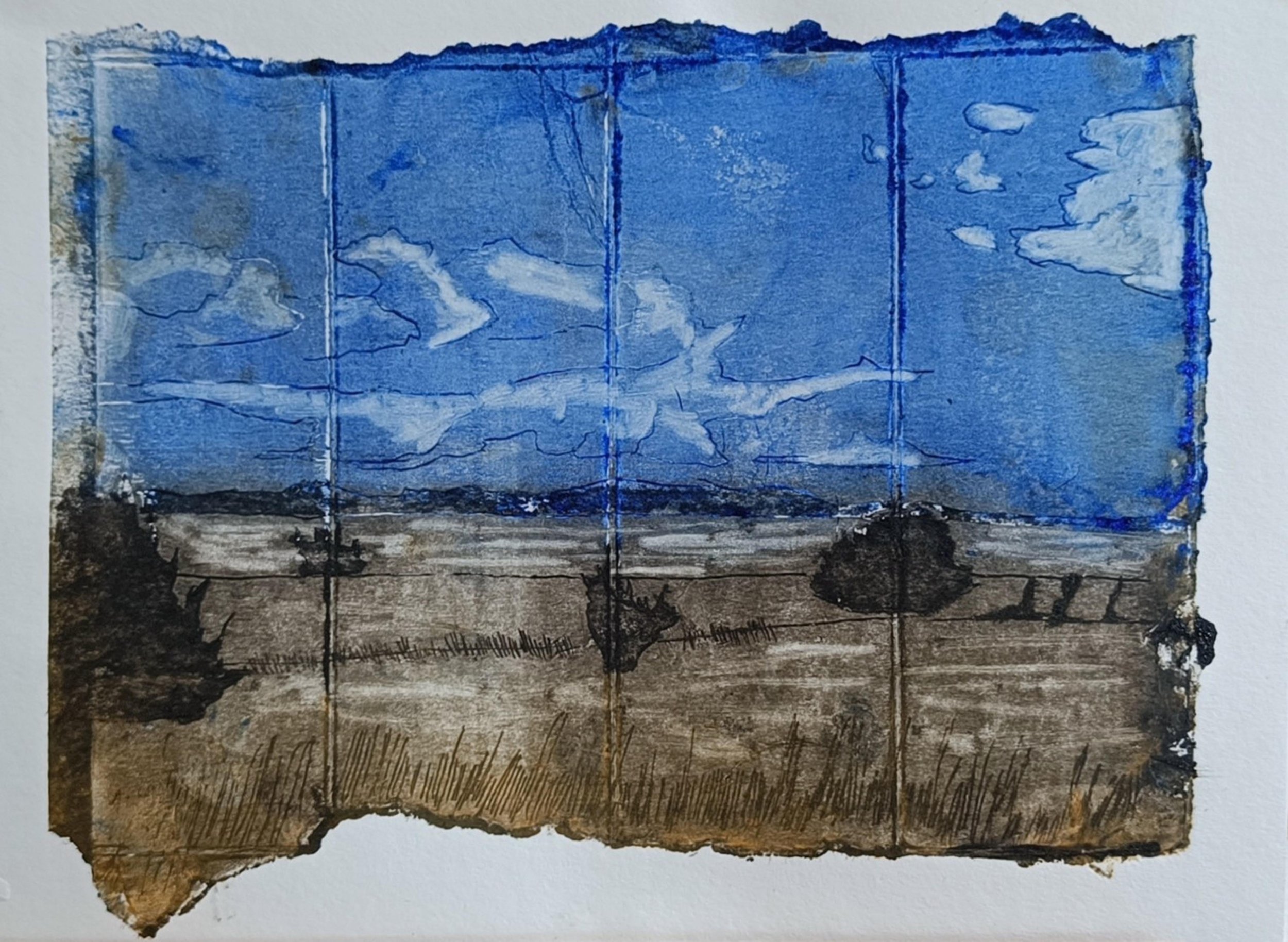
Stormy atmosphere, 2026, TetraPak Print on paper, 24 x 32 cm
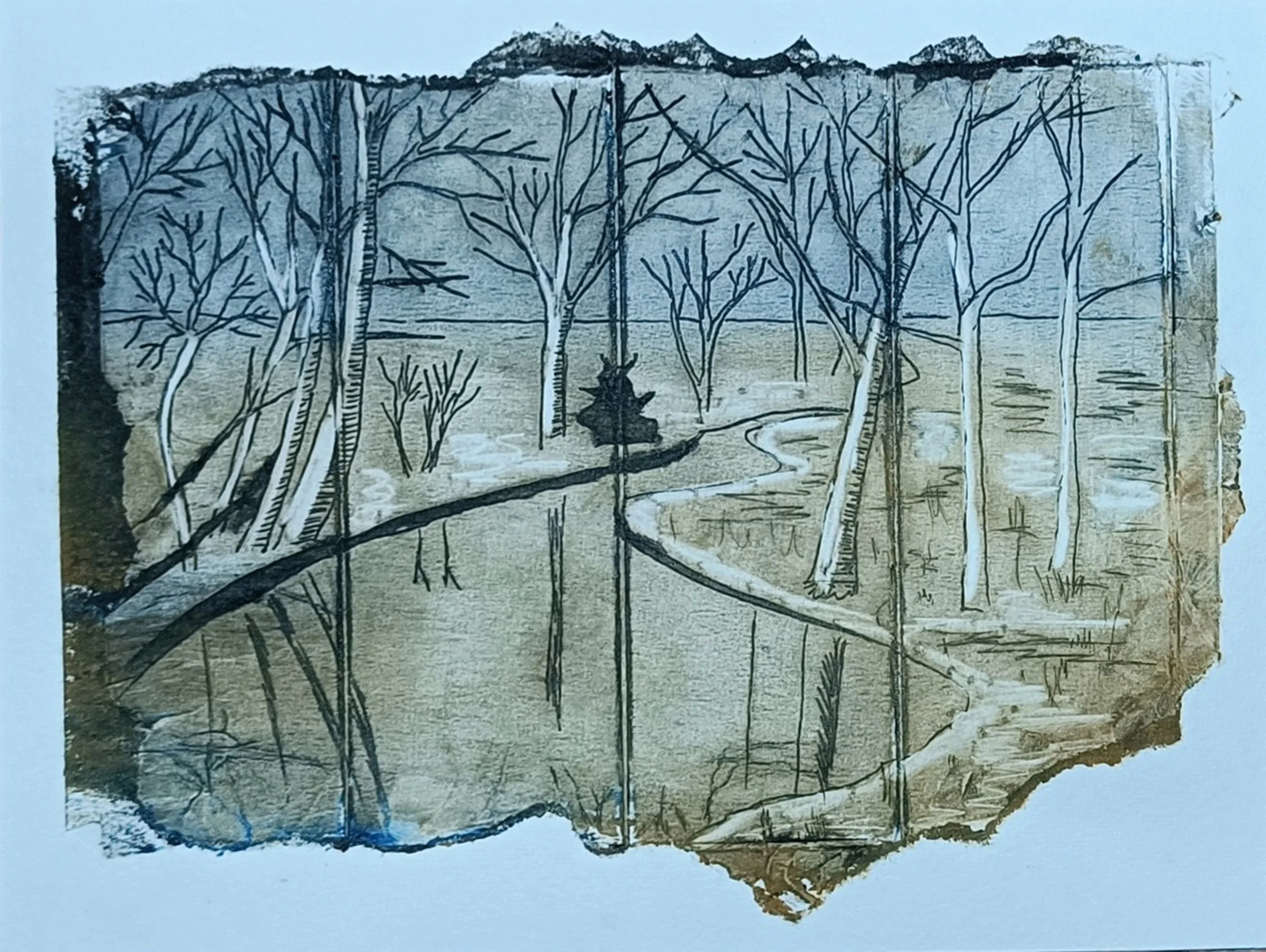
Untitled, 2026, TetraPak Print on paper, 24 x 32 cm
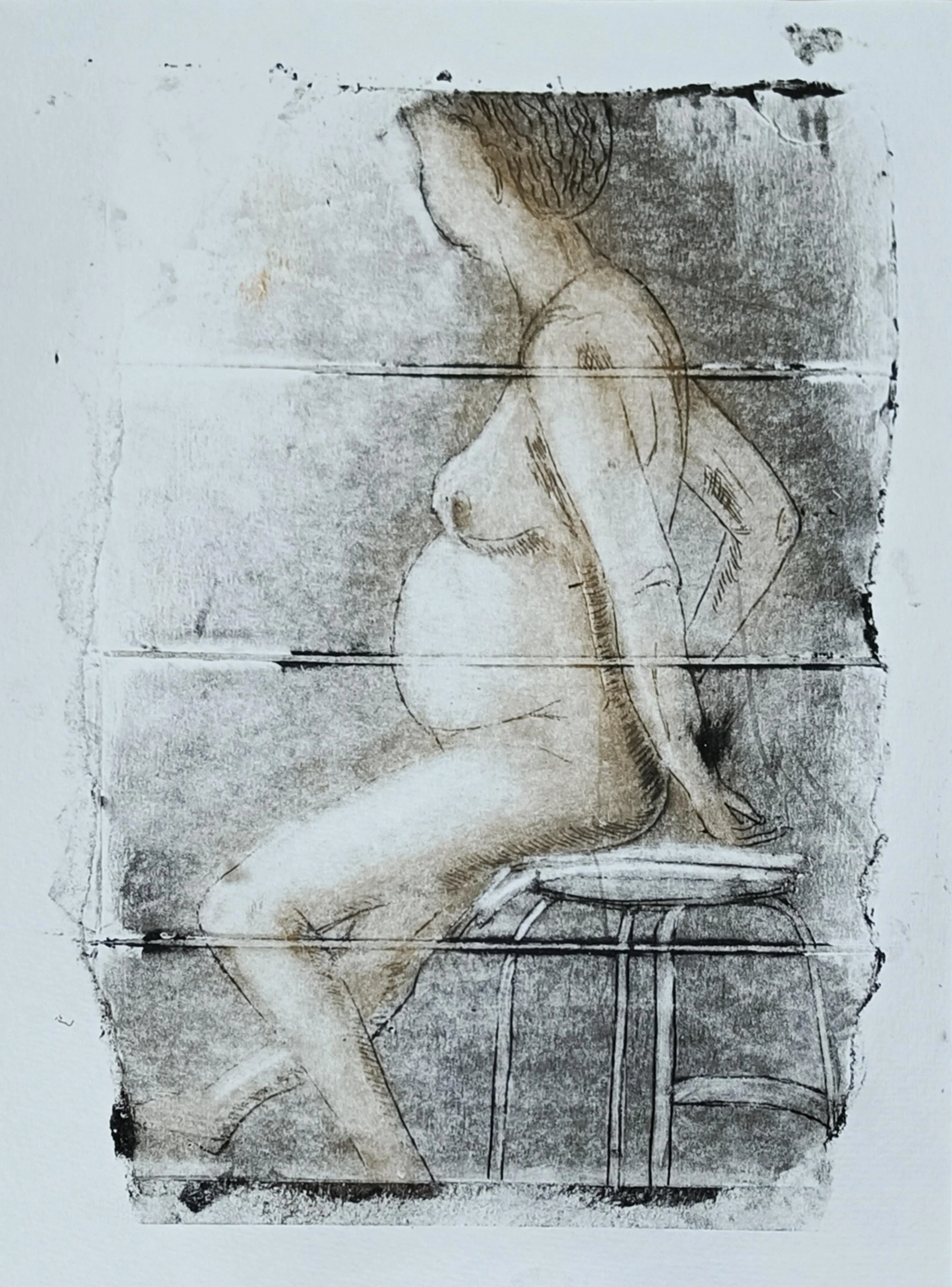
Untitled, 2026, TetraPak Print on paper, 32 x 24 cm