R. Geoffrey Blackburn
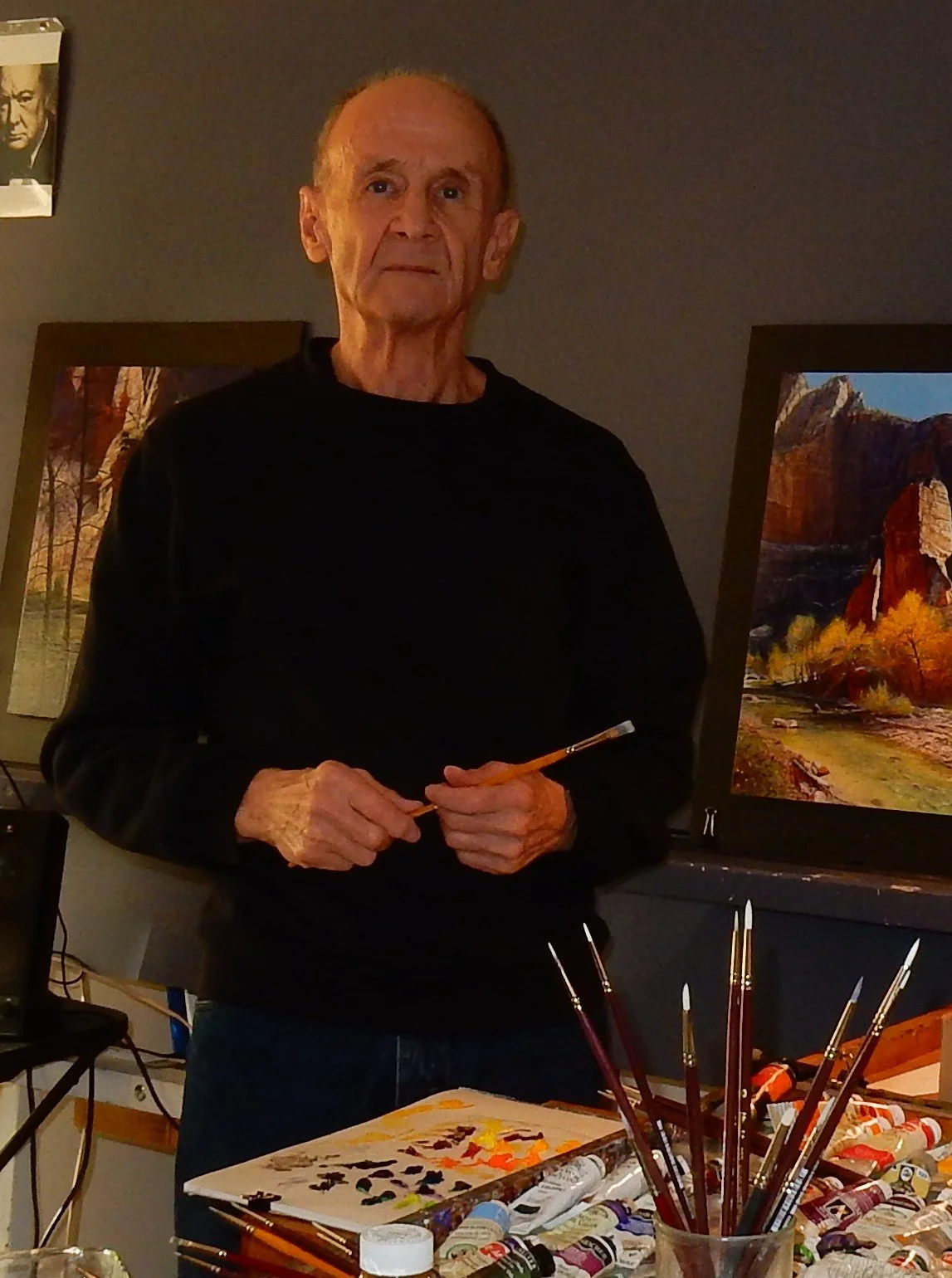
Biography
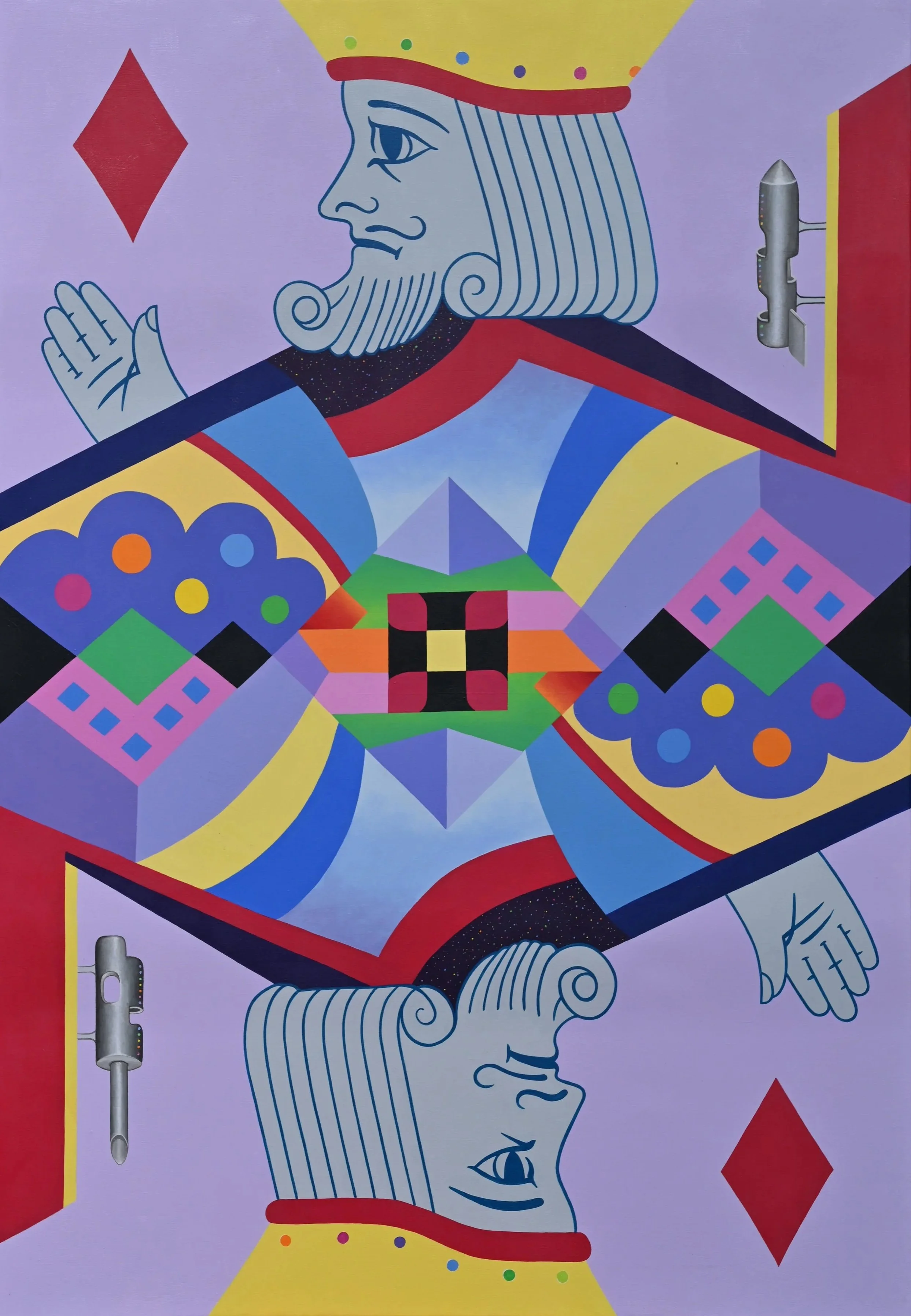
1960-1970: Surreal-Psychedelic Period
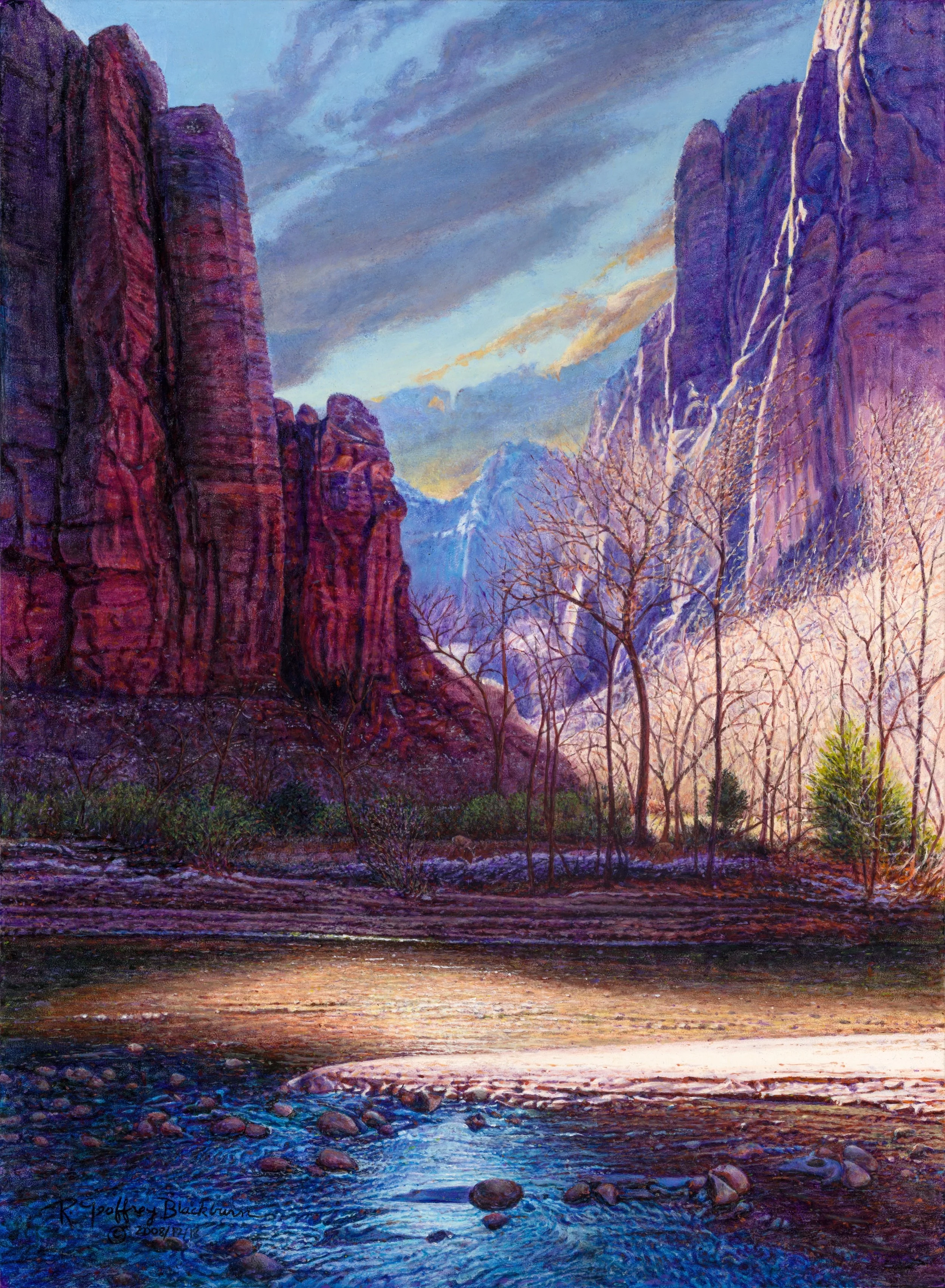
Red Rock Period: 1974 to present
From 1970-1973, prior to my "Red Rock Period," I painted almost exclusively Old West figurative scenes, often featuring cowboys on the trail doing various cowboy things and prospectors panning for gold, and so on. One of the last of these works, entitled "The Posse," was completed in 1972 and displayed at the Jailhouse Gallery in Taos, New Mexico.
After a few months, I decided that the posse would look more natural riding through a desert than through a forest, so I asked the gallery to return the painting so I could change the background. One by one, members of the Posse began disappearing under a coat of paint until, at last, there was only the Sheriff riding along the edge of a cliff, rifle in hand. Finally, he too was painted over, and thus the painting "Desert Canyons" was created. In just the right light, the posse was still visible under the desert, buried for all time like the cowboys of the Old West. The final version, now entitled "Desert Canyons," was completed in 1974, and thus began my "Red Rock Period."
Being basically an environmentalist, when my then father-in-law, James Amon Murley Jr., a truly colorful character right out of an Old West novel and an old-fashioned mining man who had little use for an artist son-in-law, thought I ought to get into something "more substantial" like uranium prospecting and promoting, I could hardly refuse.
Fortunately for me, this worked out rather well because in 1970, when all this happened, uranium was considered the clean, environmentally friendly alternative to coal, and all the big energy companies were scrambling to buy fuel for their new reactors, so the uranium boom of the 1970s was off and running, and I had a front-row seat.
As it turned out, I ended up operating a mineral exploration company based in Salt Lake City, working out of Moab, Utah. I prospected, staked claims, drilled, and promoted uranium properties all over the Colorado Plateau. On occasion, I even confronted armed claim jumpers. I worked with local claim owners and major energy companies, often doing million-dollar deals on napkins in bars and restaurants into the wee hours. The boom finally went bust when the meltdown happened at Three Mile Island, causing everyone to rethink the environmental efficacy of nuclear reactors.
Working and living in Canyon Country, I was totally captivated by the amazing red-rock vistas around Moab. I was concurrently doing photo studies and sketches of the scenes I encountered while prospecting in the area. When I returned to Salt Lake City, I turned many of these studies and sketches into paintings, a practice I continue to this day.
Given my aesthetic connection to this beautiful country, I was particularly concerned about the potential environmental impact of mineral exploration and mining on the land. Over the years, I have seen many examples of wanton destruction from previous mining operations, some of them dating back to the 19th century when people simply did not consider environmental factors. Therefore, we took great pains to leave any area we explored just as we found it. I dare say that one would find no trace of us ever having been on any of the properties we explored.
Although I have studied art both privately and at the University of Utah, I am essentially self-taught. My first recognition as an artist came at the age of eight, when my work won first prize at the annual exhibit at the world-famous Old Mission at San Juan Capistrano, California.
I have spent time in Europe studying the work of the Renaissance Masters. While in England in the early 1970s, I was the principal artist for an international magazine.
In late 1987, I "fathered" an exciting new art form I call "Multi-Dimensionalism." I was granted a patent for this user-interactive invention by the U.S. Patent Office in 1990. Of this new art form, Vern Swanson, Director of the Springville Museum of Art, wrote, ". . . I was captivated by the beauty, peacefulness, and stimulating quality of Blackburn's creation. I fully recommend this radical new innovation . . . We believe that his work will make an important contribution to society for the immediate future, bringing art back to the people."
The streets of Moab are no longer choked with red dust or rumble with gigantic trucks heading to Atlas Minerals to offload their ore. Instead, they are full of tourists and off-road adventurers here to soak up the astonishing red rock vistas that I hiked through and painted over the decades. And gone forever is the hideous Atlas eyesore!
Footnote: While I continue to paint my traditional red rock paintings, I have also revisited my surreal roots with a new series of very strange works that I plan to publish in 2027.
Artist Statement
I have done art my entire life. It is my "magnetic north" - no matter what else I do, it always tacks back to art, one way or another. My grandfather was an artist, so it's in the genes.
When I was very young, in 2nd-3rd grade, and lived in Laguna Beach, CA, I painted sea creatures, underwater scenes, sailing ships, and various scenes of a giant squid attacking the submarine Nautilus. Later, when we moved inland, I drew and painted landscapes, cityscapes, and various figurative pieces.
In 1966, I hitchhiked to New York City, en route to Nova Scotia, where I had intended to sign on to a freighter and work my way to Paris and do art on the Left Bank. For various reasons, I almost ended up in Australia instead, but that's another story. I never made it out of the States, but I did get to see an astonishing Salvador Dali exhibit at the Guggenheim Museum, which totally blew my mind, as we used to say.
In the '60s, I discovered I was actually a Surrealist and did several very strange paintings, including a psychedelic skier’s series.
During the 1970s, I was fortunate to have lived and worked near Moab, UT, which was how I came to cherish and thus focus on red rock landscapes, which, in and of themselves, are surreal.
I want to put you into the scene, have you explore its spaces, and feel like you are actually there. I want you to smell the desert flora and feel the crunch of the sand under your boots. Everywhere you look, there's something new to discover.
I paint a scene more the way you might remember it versus the way it actually is.
Although I have had some formal training, I am essentially self-taught. My art has hung twice in the White House and appeared on national and international television.
In 1987, I invented a new, user-interactive art form for which I received a U.S. patent in 1990. My inner Surrealist survives in this new artwork.

R Geoffrey Blackburn-Twilight on the Colorado-Oil on Panel, 35.6 x 61 cm
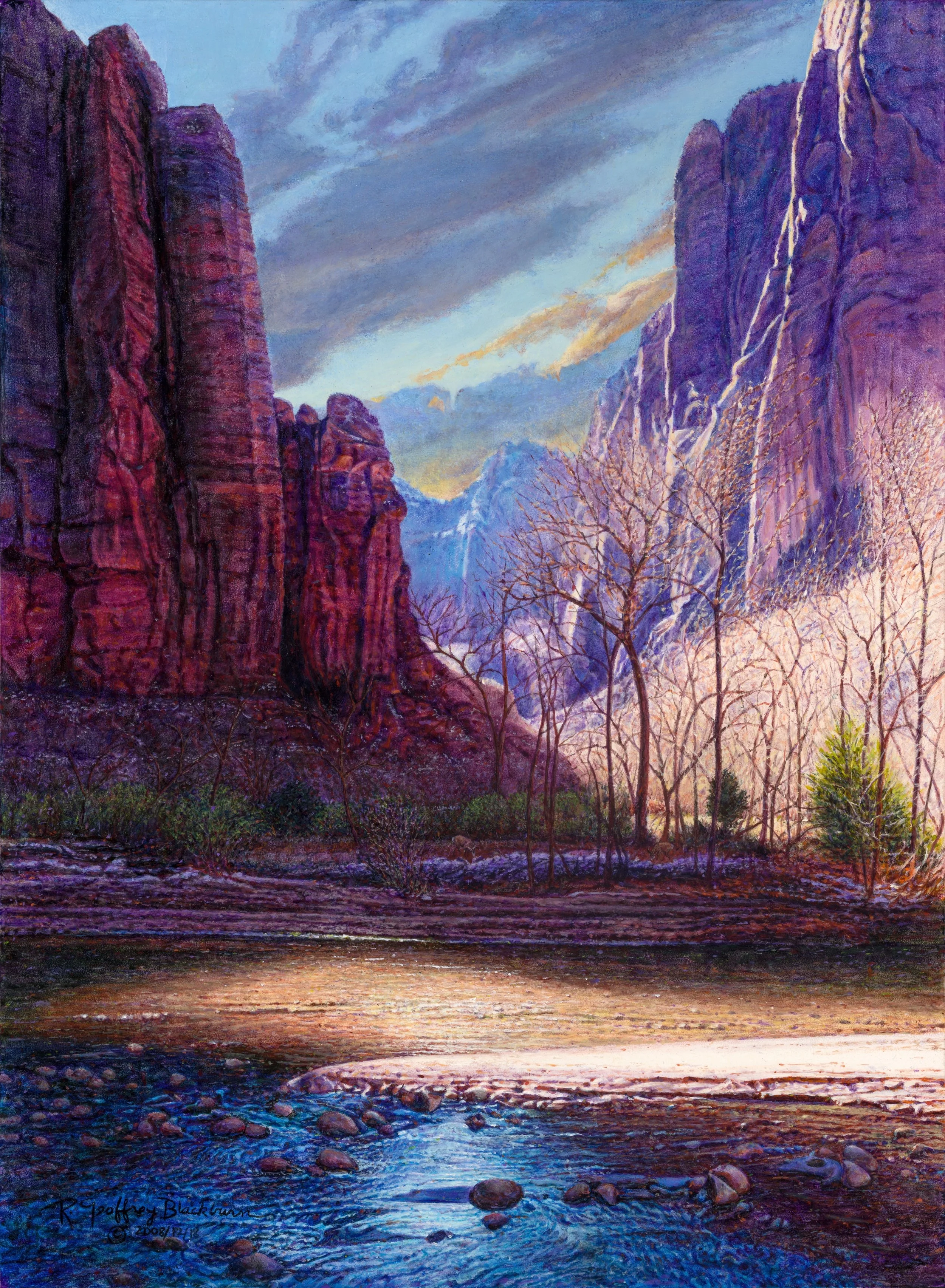
R. Geoffrey Blackburn, Temple of Sinawava, 2008/12/18, Oil on Panel, 38.1 x 27.9 cm
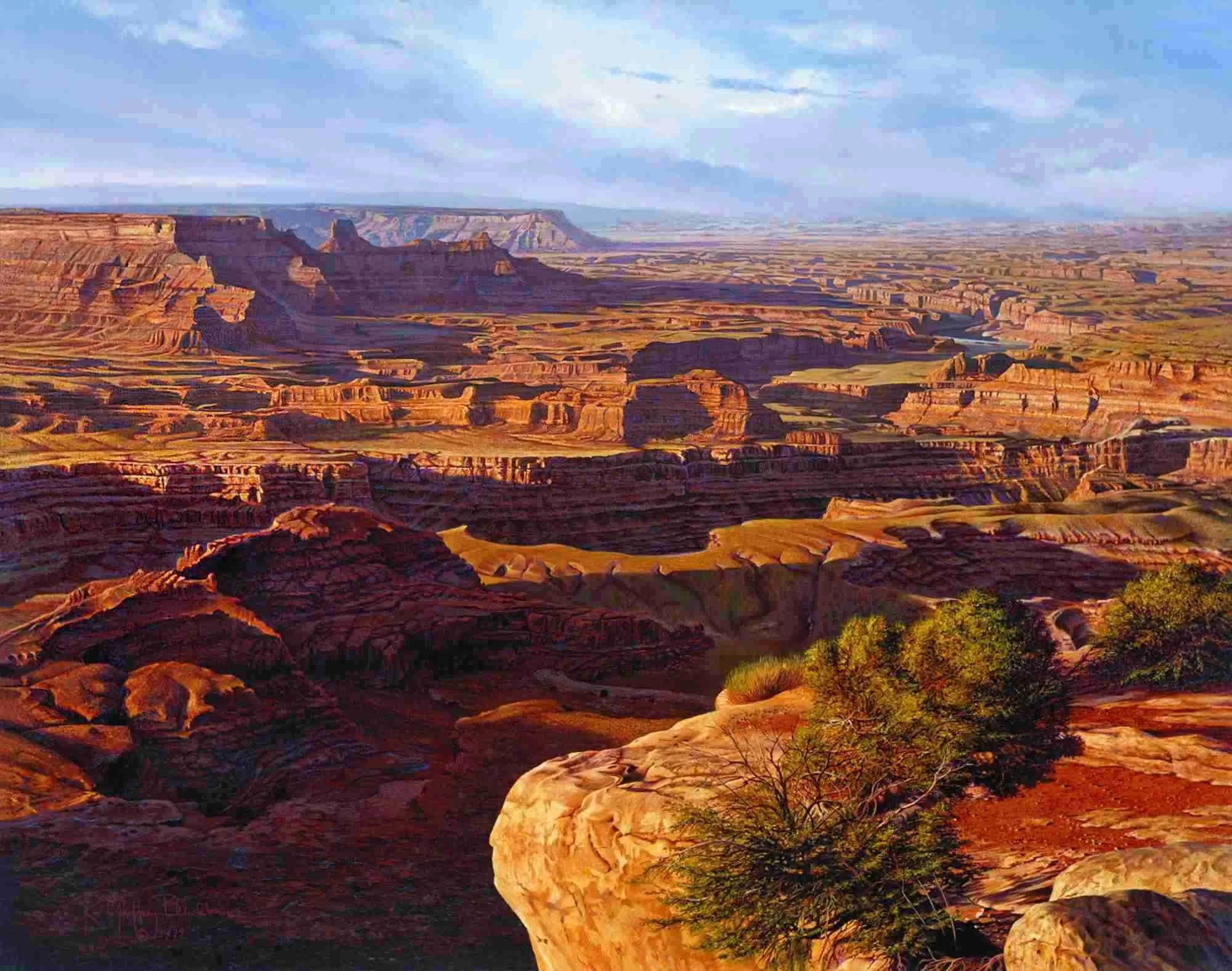
R. Geoffrey Blackburn, Red Canyon, 1979, Oil on Linen, 61x76cm
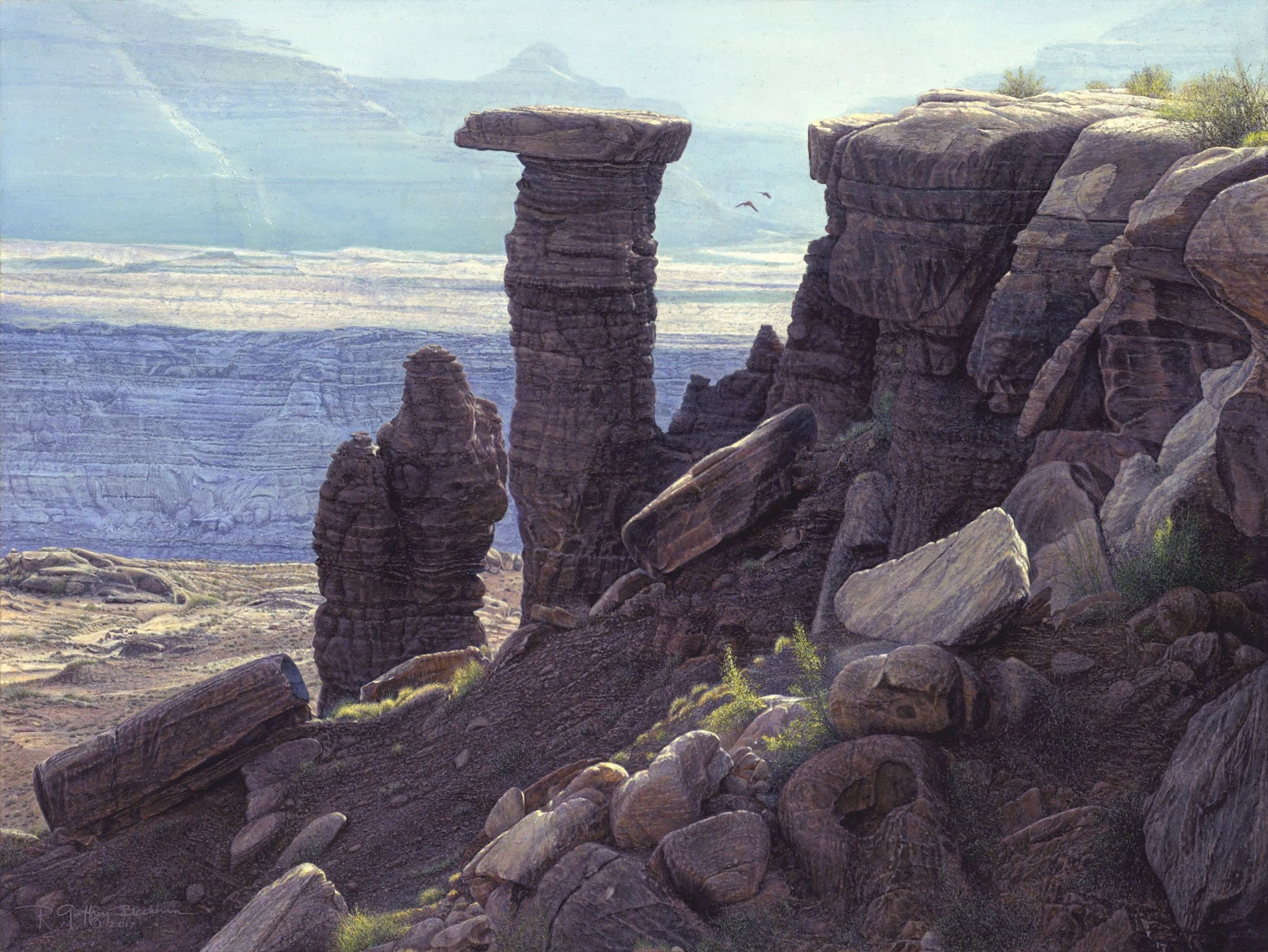
R. Geoffrey Blackburn, Two Hawks, 2007, Oil on Panel. 45.7 x 61 cm
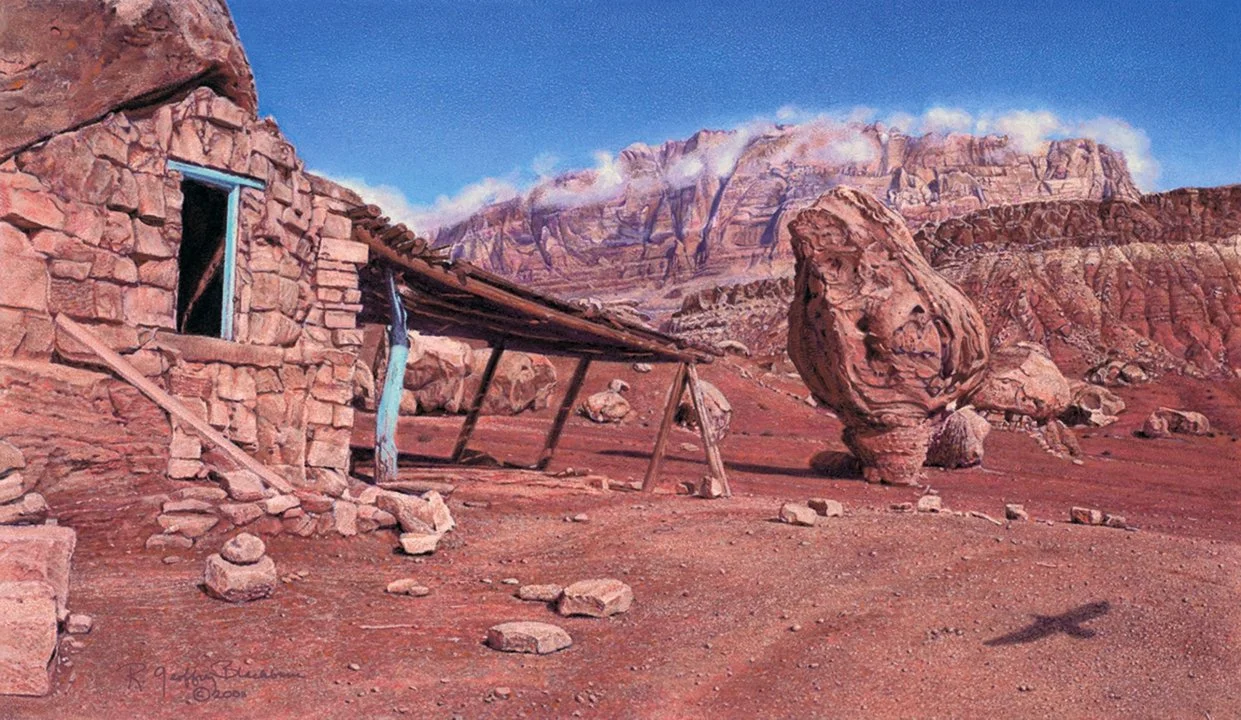
R. Geoffrey Blackburn, Desert Rules, 2008, Oil on Panel, 23 x 39 cm
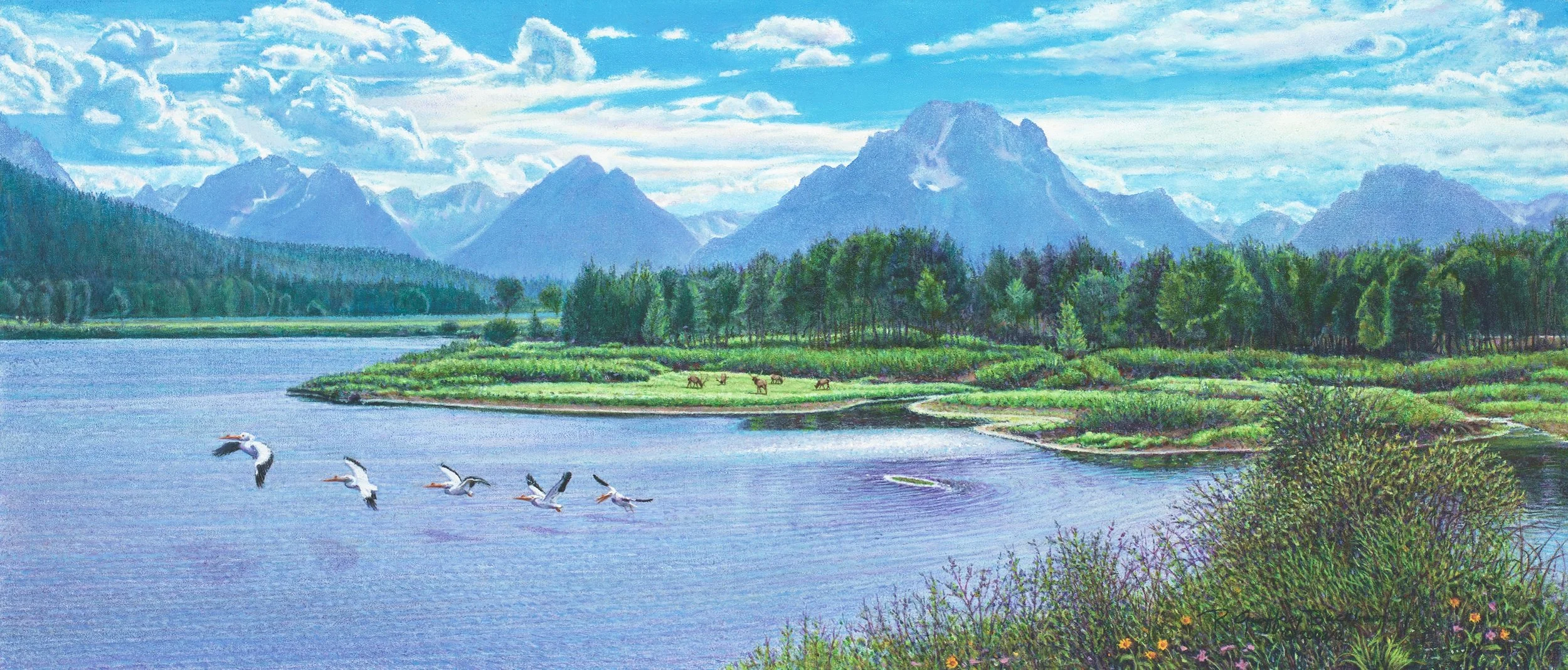
R. Geoffrey Blackburn, Pelicans Rising, 2008/12, Oil on Panel, 20.3 x 47 cm
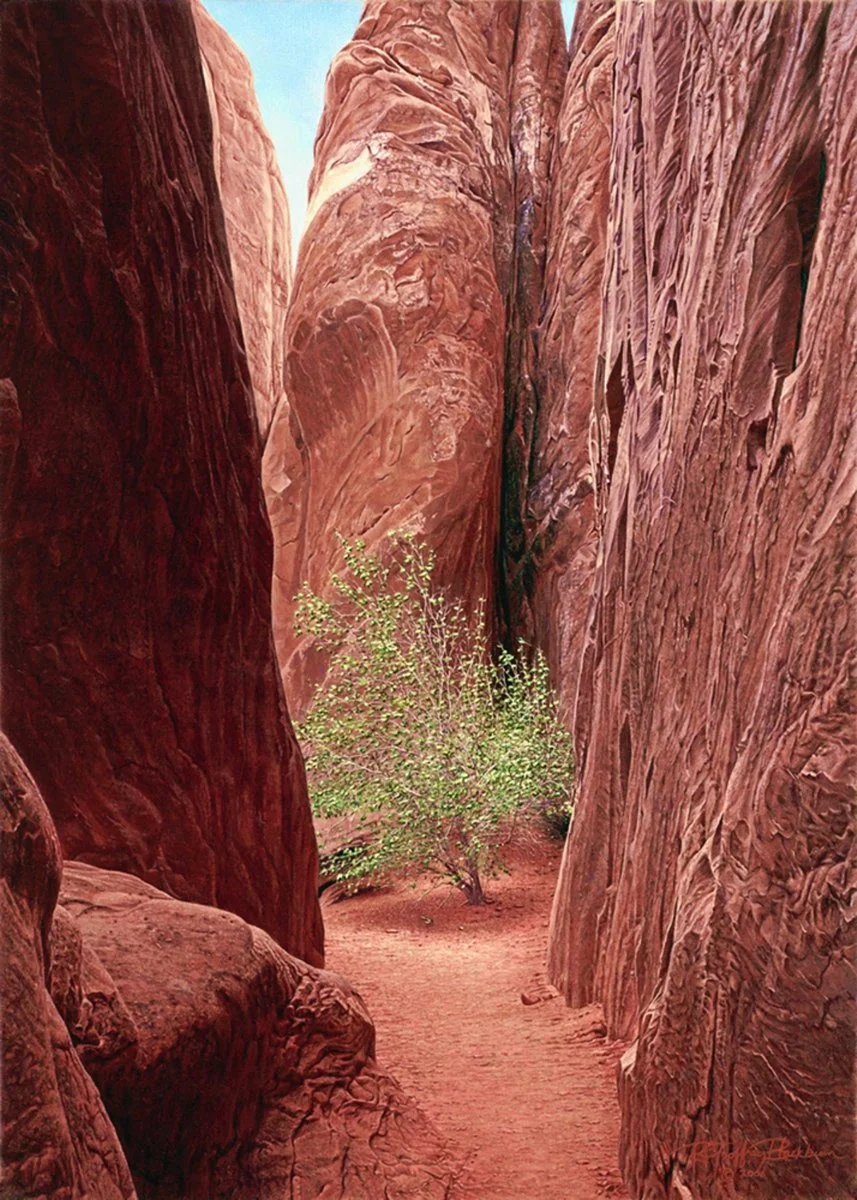
R. Geoffrey Blackburn, Two in the Bush, 2006, Oil on Linen, 71 x 51 cm

R. Geoffrey Blackburn, Dead Horse Autumn, 2004/15, Oil on Linen, 66 x 91.4 cm
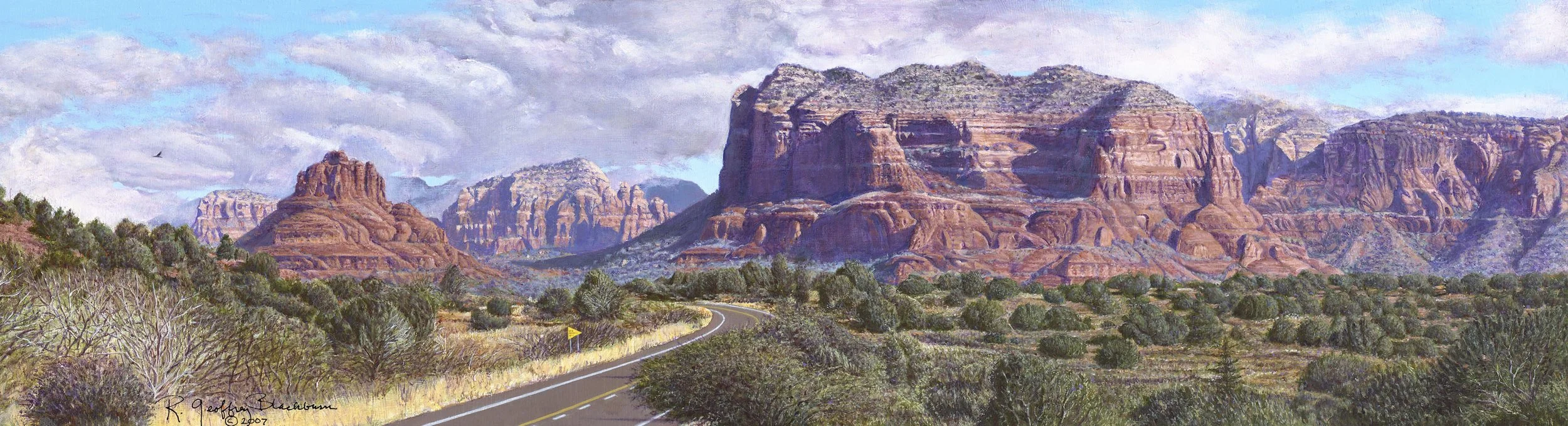
R Geoffrey Blackburn, Road to Sedona, 2007, Oil on Panel, 15.2 x 54 cm
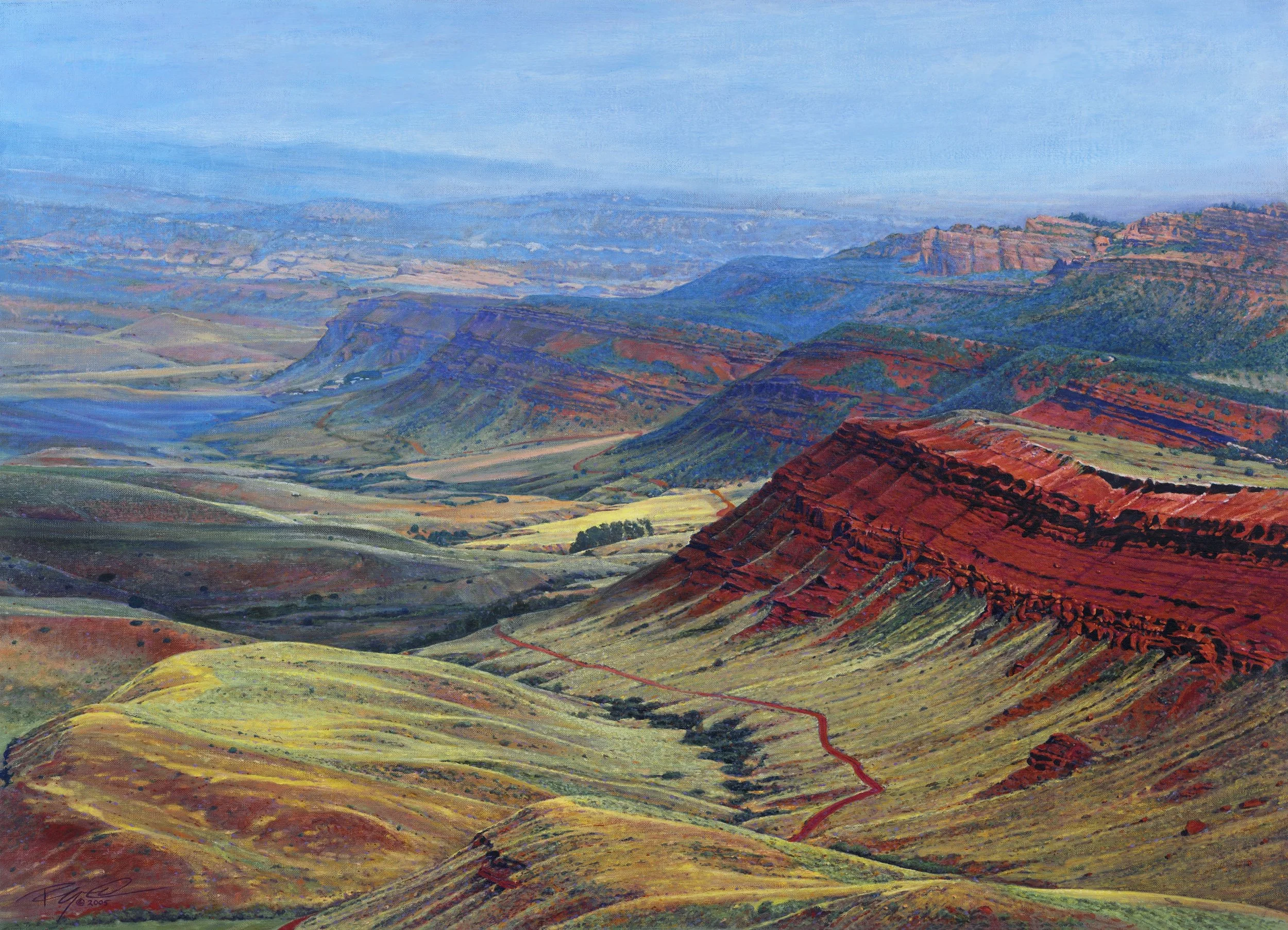
R Geoffrey Blackburn, Red Canyon, Lander, 2005, Oil on Panel, 66 x 91.4 cm