Igor Smirnov
Biography
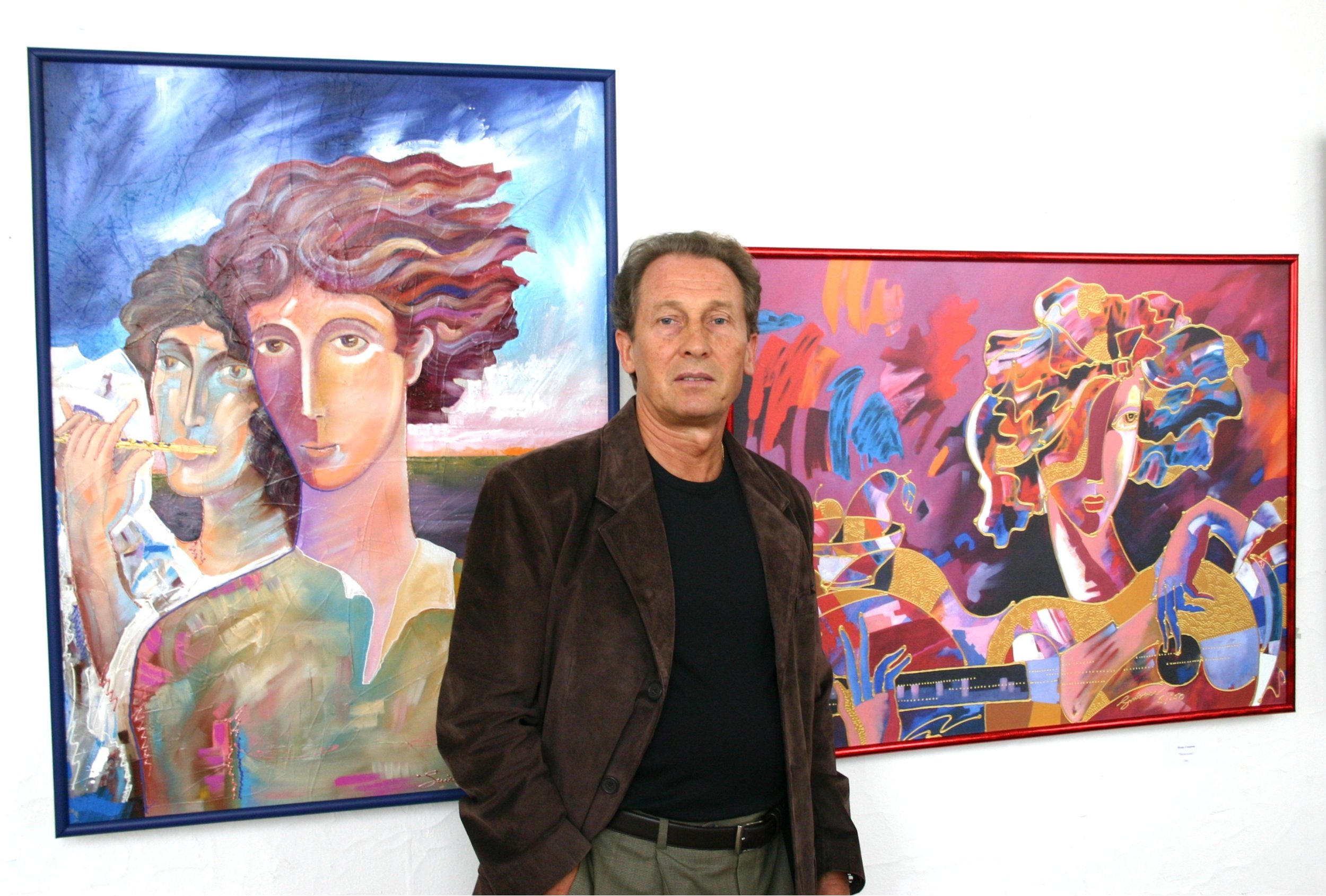
Igor Smirnov began his art career at the College of Fine Art. He then obtained an M.S. in Engineering & Design at the Naval Academy, where his rich depth as an artist was enhanced by his knowledge of geometric forms and proportions.
Later, he spent two years restoring priceless icons and paintings at the Russian Museum of Art and the Museum of Urban Sculpture in St. Petersburg, Russia. From the early 1980s, he participated in the movement of non-conformist or "underground" art in Russia. The artworks of Igor Smirnov were presented at the most popular "underground" art shows in St. Petersburg, Moscow, and Germany from 1982 to 1988.
Igor Smirnov's artworks attracted the attention of John Whitehead, the U.S. Deputy Secretary of State, when he visited Moscow in December 1987 in preparation for the meeting between President Reagan and Soviet leader Mikhail Gorbachev. Following Mr. Whitehead's personal request to Soviet Minister of Foreign Affairs Mr. Shevardnadze, the authorities of the USSR allowed Igor Smirnov to immigrate to the United States. The artist happily settled in California, enjoying the benefits and stimulation of the new environment.
Since that time, Igor Smirnov has gained worldwide recognition, with his paintings displayed in museums and galleries in the United States, Europe, Asia, and Russia. His artworks are included in the collections of C.A.S.E. Museum of Contemporary Art in New Jersey and Paris, Funds of Russian Contemporary Art in Munich, Art Brillant Co. Ltd. in Tokyo, the Museum of Dostoevsky in St. Petersburg, Russia, Chevron Inc., and the Marine Life Conservation Society in California, to name a few.
Igor Smirnov's exhibitions at Artexpo New York and Artexpo California, expositions with Art Brillant in Japan and Europe, Galerie Michelangelo in Caesars Palace, Las Vegas, Sunjin Gallery in Singapore, Galerie George International, and Timmons Gallery in California revealed the fascinating works of this gifted artist.
The monograph "Between the Moment and Eternity: Artwork of Igor Smirnov," written by art critics Irina Alievsky, M.S., and Reena Judens, Ph.D., was published at the beginning of 2006. This monograph is held by the Metropolitan Museum, Hammer Museum, Guggenheim Museum, Los Angeles County Museum, San Diego Museum of Art, and Contemporary Art Museum San Diego.
The monograph "Homo Viator. Artist Igor Smirnov: The Stranger Between Worlds," written by art critics Gorina I.V., Ph.D., and Trofimova E.A., Ph.D., was published in 2021 in St. Petersburg, Russia, by Renome Publishing House.
Artist Statement
Symbolic art by Igor Smirnov expresses a new tendency in art perception and interpretation. At the same time, it is focused on eternal values and affects the emotional and mental state of the viewer through the process of associative thinking.
The relationships between time and space have always been at the forefront of philosophical thinking and have found expression in visual art. It may be said that the twentieth century indeed manifested an insatiable thirst for the interpretation and reinterpretation of time. There were a number of attempts at reformation, transformation, and even refutation of the basic concepts of art in the search for the fourth dimension, reverberating echoes of time in visual art. Following the new theories of philosophy, physics, and psychology that appeared in this century, visual art created a new language for the representation of time. Thus, time became not only the key point of life but of art as well, allowing us to evaluate art in the light of its relationship to temporality.
At the beginning of the third millennium, the tendency to immerse oneself in fin de siècle aesthetics became very popular and is reflected in the content of visual art. The apocalyptic nature of this era creates emotional stress and a feeling of instability. The artist finds himself in an almost unforeseeable situation, when everything in his world tumbles out of control, without stability, in a state of permanent flux. Moreover, the course of global events and the radical increase in the tempo of modern life lead to the transformation of consciousness and the alteration of the processes of perception, evaluation, and interpretation of art by the audience. As a result, in order to find a place in the context of modern art, the artist has to realise how he can create the symbolic equivalent of a constantly changing external world.
Due to the desire to reflect the values and ‘realities’ of the world around them, many artists create art that is restless and momentary. However, if we examine the artworks that are considered to be masterpieces, such as the art of the Italian Renaissance, Classicism, and the art of the beginning of the twentieth century, we will find that they always reflect eternal values along with concrete moments of time and life. The act of evaluation and interpretation of art, and by extension the creation of great art, is not a momentary act of observation and passive acceptance. It is an active immersion in the artwork and in your own subconscious.
Contemporary art demands the same involvement and, in fact, is even more demanding in its own way than the already culturally assimilated old masters, but the technique of evaluation is absolutely different. The contemporary art viewer is brought up in a computerised, technological environment and is familiar with virtual space from childhood. The viewer is accustomed to dealing with symbolic forms through the associative thought process as well as through modern technology. In the modern world, art and technology are mixed and coexist. The audience of the twenty-first century can perceive art in both ways: as a piece of art and as a source of information presented in symbolic form.
The Style of "Symbolic Realism"
• Visual Characteristics: Smirnov’s works feature a precise, bold linear framework paired with vibrant colour structures that give them the distinct look and feel of stained glass or enamel.
• Melding of Forms: Unlike Cubism, which breaks objects down into separate analytical components, Smirnov’s technique focuses on uniting and melding shapes, figures, animals, and objects together into a single harmonious composition.
• Psychological & Spiritual Mission: Heavily influenced by his background in engineering, psychology, including the study of Jung and Freud, and colour therapy, Smirnov treats art as a vehicle to convey spiritual information, evoke positive subconscious emotional responses, and bring peace and harmony to the viewer.
Website: www.smirnovfineart.com
https://www.itsliquid.com/featured-artist-igor-smirnov.html
https://www.artdealerstreet.com/single-post/the-visual-harmony-of-igor-smirnov-symbolic-realism-in-practice
https://www.artbrokerage.com/Igor-Smirnov
https://www.moodartfair.com/igor-smirnov
https://www.worldofartmagazine.com/AwardExpo/Igor-Smirnov/Igor-Smirnov.htm
https://issuu.com/fineartmagazine/docs/new-smirnov-54-55-56
Instagram: https://www.instagram.com/p/C3vgLxIMO8W/
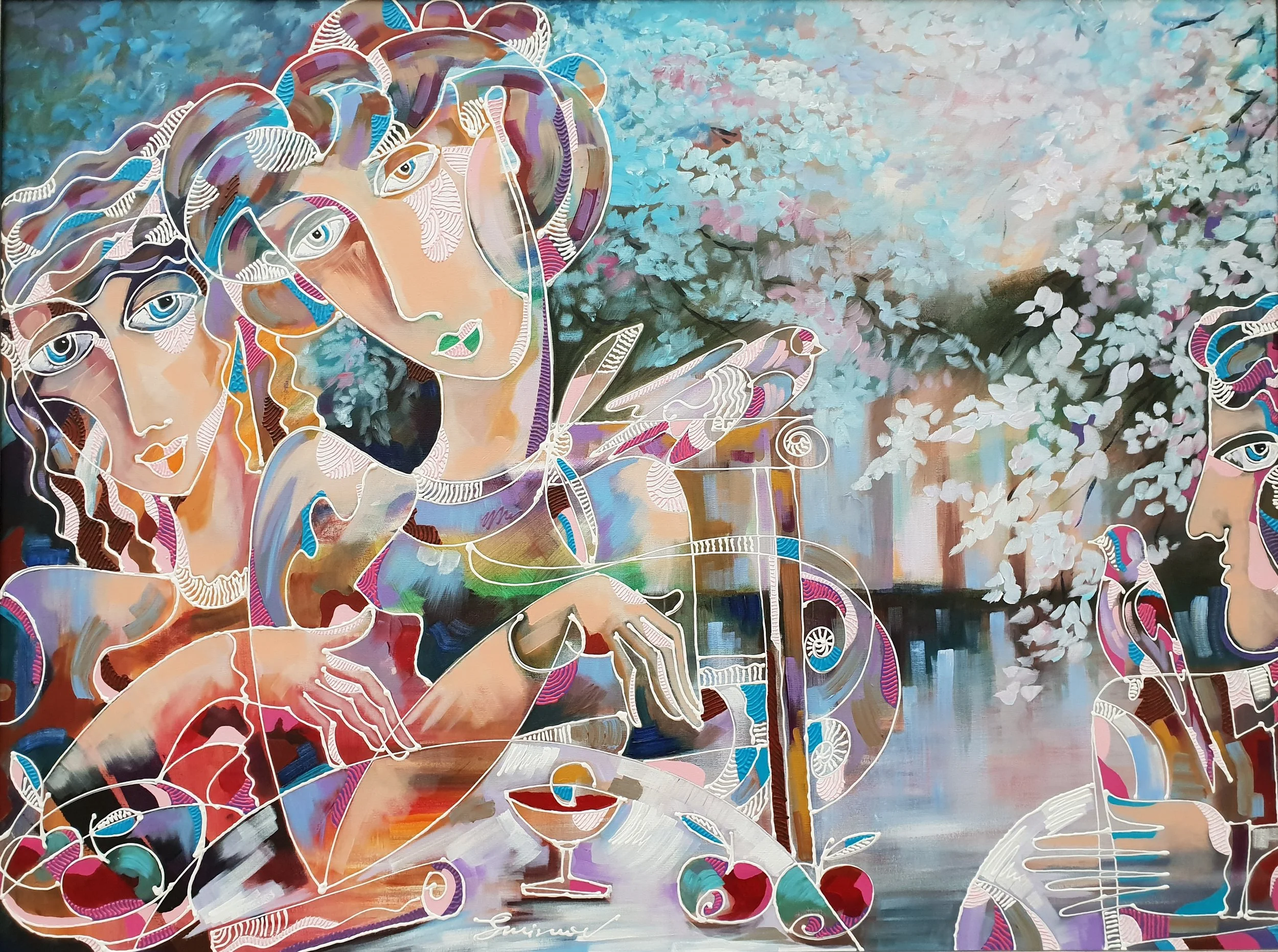
Cherry blossom, 2016, acrylic on canvas, 150 x 100 cm.

Flight over the city, 2003, mix media on cardboard, 100 x 85 cm.

The Memories of Greece, 2026, acrylic on canvas, 100 x 70 cm.

Lemon tree, 2019, acrylic on canvas, 60 x 40 cm.

Horserider, 2012, mix media on paper, 60 x 40 cm.
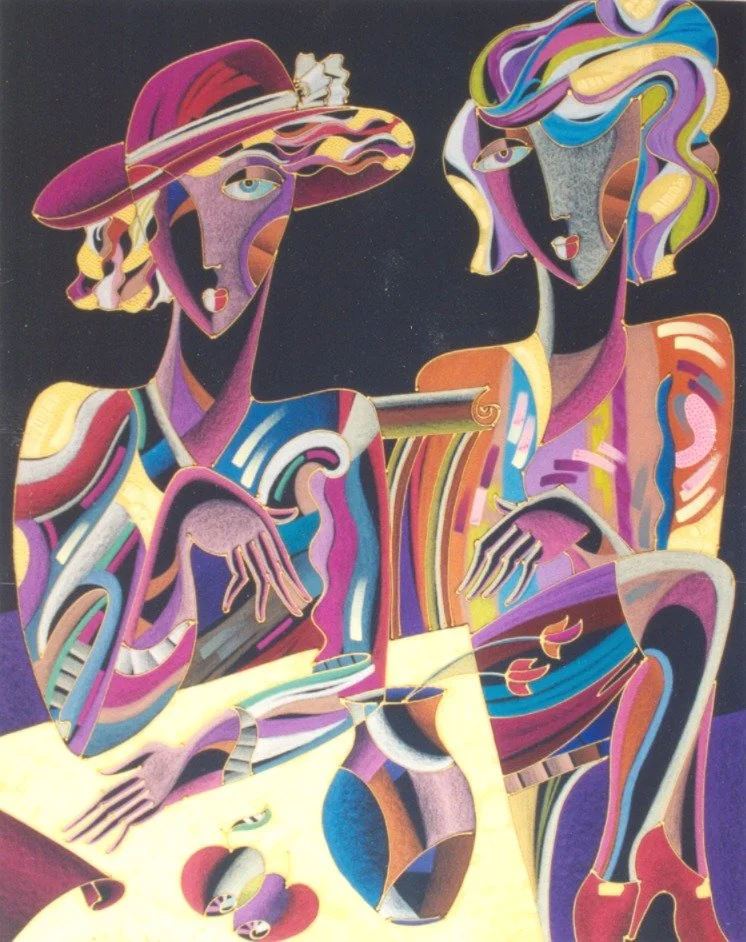
Two ladies, 2009, mix media on cardboard, 100 x 80 cm.

Sea story, 2014, mix media on paper, 60 x 40 cm.

Lady with guitar, 2021, acrylic on canvas, 75 x 100 cm.

Composition with a bird, 2017, acrylic on canvas, 60 x 40 cm.
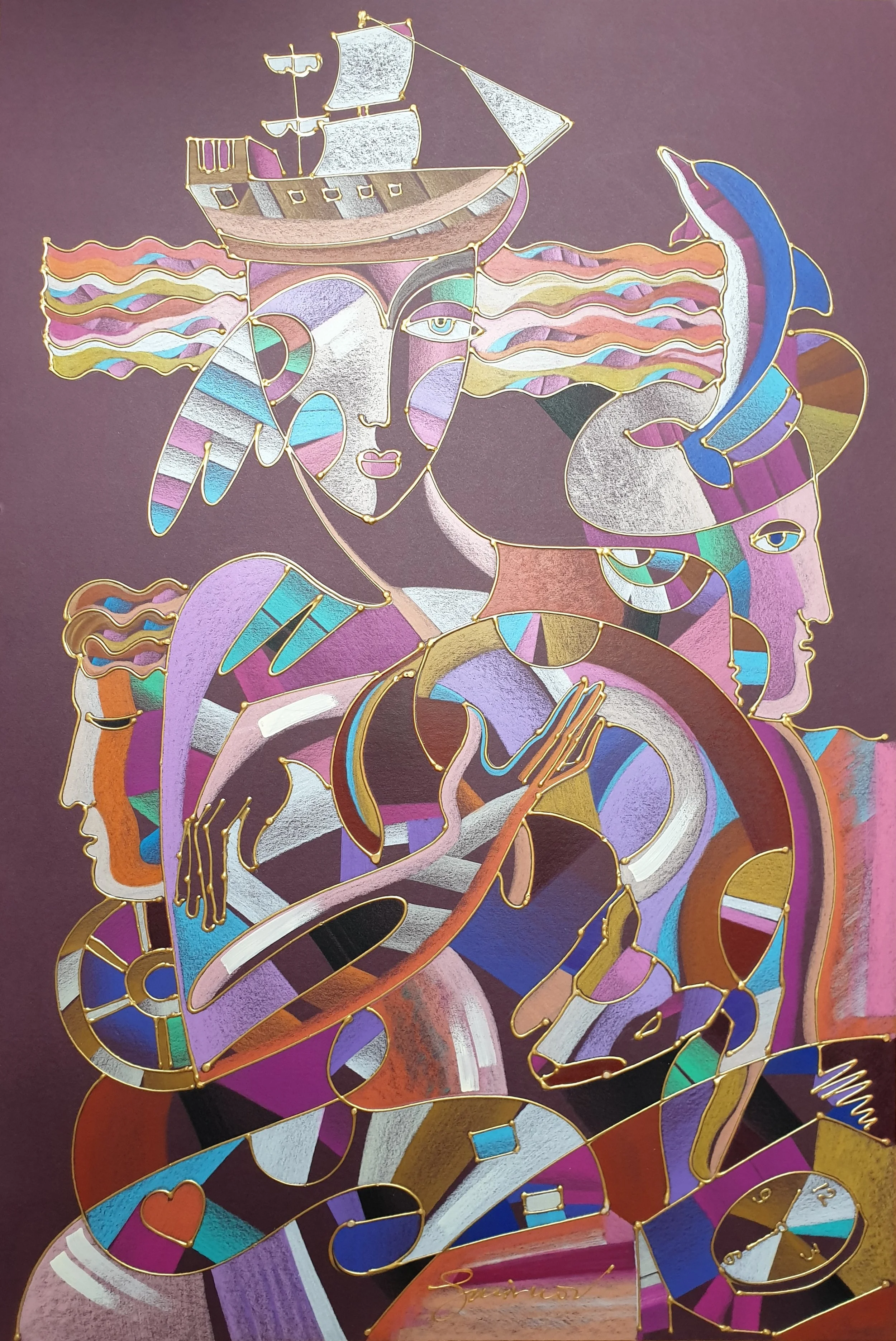
My course is set for the uncharted sea, 2009, mix media on paper, 85 x 55 cm.